
Don't forget to come on over to the West Side Theater this afternoon at 3 for the Sunday Matinee performance of Macbeth. While you are likely to see Denise Hurd, as Lady M, agonizing over her bloody hands, you probably won't hear the monologue sung. So, for something different, how about a look at Lady Macbeth . . . the musical star.
And later, when you're thinking how silly this is, come on over to the West Side Theater and hear the words done in earnest.
Showing posts with label Lady Macbeth. Show all posts
Showing posts with label Lady Macbeth. Show all posts
Sunday, March 18, 2012


Friday, March 16, 2012
Lady Macbeth -- a man playing a woman becoming a man?
Sometime around the Sixth Century B.C., when theater was ritualized, women were banned from the stage and were almost universally prohibited from performing in Western Europe until 1660. So Lady Macbeth, like all the great Shakespearean roles, was written for a man.
In one of her most dramatic moments, Lady Macbeth pleads, "Come, you spirits/That tend on mortal thoughts, unsex me here,/And fill me from the crown to the toe top-full/Of direst cruelty!"suggesting that cruelty and "thick blood" are characteristics only attributable to a man.
In order to spur her husband to bloody murder, she must become the man within her and eschew her softer instincts lest he be inclined to be somewhat womanlike and consequently afraid of action.
The raven himself is hoarse
That croaks the fatal entrance of Duncan
Under my battlements. Come, you spirits
That tend on mortal thoughts, unsex me here,
And fill me from the crown to the toe top-full
Of direst cruelty! make thick my blood;
Stop up the access and passage to remorse,
That no compunctious visitings of nature
Shake my fell purpose, nor keep peace between
The effect and it! Come to my woman's breasts,
And take my milk for gall, you murdering ministers,
Wherever in your sightless substances
You wait on nature's mischief! Come, thick night,
And pall thee in the dunnest smoke of hell,
That my keen knife see not the wound it makes,
Nor heaven peep through the blanket of the dark,
To cry 'Hold, hold!'
Friday, March 9, 2012
Who's to Blame Here?
"There was a time," sings Annie Lennox, "that we used to say that behind every great man there had to be a great woman. . . ."
Critics have been arguing back and forth about who's to blame for the evil in Macbeth. Are the witches responsible for reeking havoc on the House of Cawdor? Did Lady Macbeth lead her docile, vulnerable man into temptation and then unleash his furor on the kingdom of Scotland?

Michael Basile, who plays Macbeth in the ASC's production of the play that bears his name, says that the Lady spurs him on until he has actually killed Duncan, and then he takes the wheel of the machine that is careening out of his own control.

It's a question for the ages. See the play, watch Denise Hurd as the Lady, and then weigh in for yourself.

Sunday, March 4, 2012
And now a word about Lady Macbeth
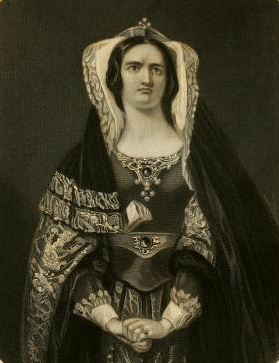
You don’t have to look too deeply to see the resonances in Shakespeare’s work to current events in whatever time you live. I remember reading Macbeth in high school and thinking that however unsympathetic Lady Macbeth might be, she was a heroine to be admired though feared. I thought how appropriate that she feels the need to invoke the spirits to “Unsex me here” in order to get what she wants, since it is a woman’s sex that keeps her under male control.

Years later, after all the bra burning and the Equal Rights Amendment brouhaha, I saw Macbeth at the RSC, and again I was struck by the Lady’s pertinence. Even in the ‘90’s, glass ceilings and other accouterments of subtle antifeminism were rife.
Today, women’s rights have again become a matter of grave concern for politicians on both sides of the issues, and matters we long since thought resolved are back in the cauldron, coming to a bubbling boil.

Lady Macbeth is relevant because she embodies all that we as a society both admire and fear in women. Lady Macbeth forces Macbeth out of his introspective musings and into the arena of action. She takes control of the situation, and once she does, Macbeth can no longer hide behind his poet’s sensibilities; he must act. His choices are clear. He must collaborate with her or kill her. Because she is so compelling, because she is so forceful, so downright seductive . . . he chooses collaboration, and thus the plot thickens.
It’s the ongoing Human Comedy really. It’s the stuff that everyday human relations as well as world politics are made on.
Subscribe to:
Posts (Atom)


